Categories
Rappers for regime change
Categories
MRH clients: Mark
Categories
Arbitration: terminology
As of today, 1 October 2026, the Chancery Division of the High Court of England and Wales no longer exists under that name.
It has been replaced by the Business and Property Division under the Senior Courts (Transfer, Amendment and Consequential Provision) Order 2026 (SI 2026/723). The Judiciary confirmed the change took effect today. The new division sits alongside the King’s Bench Division and the Family Division.
What changed in substance:
• The Chancery Division was renamed the Business and Property Division. The Chancellor of the High Court became the President of the Business and Property Division.
• Specialist courts that had sat in the King’s Bench Division — including the Admiralty Court, the Commercial Court, the Circuit Commercial Court and the Technology and Construction Court — moved into the new division.
• The old Chancery lists continue inside it: Business, Insolvency and Companies, Property, Trusts and Probate, Intellectual Property (including the Patents Court and the Intellectual Property Enterprise Court), and the related specialist lists.
Existing Chancery judgments stay under the old neutral citation. New judgments from today are published as Business and Property Division decisions. The work itself has not disappeared; the divisional name and the grouping of the specialist courts have.
Categories
Account Freezing Orders – HJA
Categories
Revolution in Syria?
Success for Alexander Macpherson in Court of Appeal: ABC v Huntercombe – Crown Office Chambers
— Read on www.crownofficechambers.com/2026/09/08/success-for-alexander-macpherson-in-court-of-appeal-abc-v-huntercombe/
https://www.ukemploymenthub.com/high-court-rules-vicarious-liability-does-not-transfer-under-tupe/
Categories
List of MP’s banned by Israel
Categories
UK’s involvement in Iran
Categories
Gaza node map
Categories
Lawyers support for Rajiv Menon KC
Categories
Green: El Niño 2026
Categories
HMG Russia Unit

Subscribe to continue reading
Subscribe to get access to the rest of this post and other subscriber-only content.
Categories
Vultures
x.com/aakashgupta/status/2088476778298065064
Yes, the core claims in the tweet are accurate and well-supported by scientific evidence and a major peer-reviewed economic study.
India’s vulture populations (especially Gyps species like the white-rumped, Indian, and slender-billed vultures) collapsed dramatically starting in the mid-1990s after the patent on the NSAID painkiller diclofenac expired around 1993–1994. Cheap generic versions became widely used on livestock. Vultures that fed on treated carcasses suffered kidney failure and died. Populations dropped from an estimated ~40–50 million birds to a few thousand within about a decade—one of the fastest collapses of any bird species on record (comparable in speed to the passenger pigeon’s decline in some descriptions). Diclofenac was banned for veterinary use in India in 2006, but recovery has been limited, and residual or illegal use plus other toxic NSAIDs remain issues.
Vultures have extremely acidic stomachs (near pH 1) that neutralize many pathogens (including those causing anthrax, botulism, and others) in carcasses. They efficiently strip carcasses (a flock can reduce a cow to bones in ~40–45 minutes), providing free large-scale sanitation in a country with cultural/religious practices that leave many cattle carcasses unprocessed.
Without them, carcasses accumulated, rotting material contaminated water and the environment, and feral dog populations rose (dogs are less efficient scavengers and major rabies vectors). A 2024 study by environmental economists Eyal Frank (University of Chicago) and Anant Sudarshan (University of Warwick), accepted/published in the American Economic Review, analyzed district-level data. In areas that had been highly suitable for vultures (and thus hit hardest by the collapse after diclofenac spread), all-cause human mortality rose by more than 4% (around 4.7% in some reports) relative to areas with historically low vulture presence. This equates to roughly 100,000–104,000 extra deaths per year from 2000–2005, or about half a million over five years. They estimated annual economic damages from the excess mortality at ~$69–69.4 billion (using an India-specific value of statistical life). Supporting evidence included rises in feral dogs, rabies-related factors, and water pathogens.
These findings have been widely reported by outlets including the BBC, CBS, Science, Smithsonian, and others, and align with earlier ecological research establishing diclofenac as the primary cause of the vulture crash. The tweet’s summary of the digestive role, population numbers, collapse speed, carcass disposal dynamics, mortality increase, annual death toll, and economic cost closely matches the study and scientific consensus. Minor phrasing details (e.g., exact “half a million… in five years”) are consistent with the estimates.
Abbott & Ors v Ministry of Defence
— Read on www.lawgazette.co.uk/news/costs-shared-in-mod-hearing-claims-as-both-sides-partly-successful/5127642.article
Categories
Arrested for clapping in the UK
Categories
Politician watch: Wes Streeting
Categories
IRGC proscription
x.com/pauleholden/status/2076686211398181088
https://x.com/tracking_power/status/2076753582708109546?s=46&t=XgBsxv5LyxWhmBuQ2wK5bA
Grok says:
No, there is nothing in Pete’s Library (petervlyons.com) that shows support for the IRGC or appears unlawful in relation to its designation/proscription.
Site Overview
Pete’s Library is a straightforward blog-style site that aggregates and shares links to legal news, court cases, employment law updates, human rights topics, and X/Twitter posts. It functions as a personal “library” or clipping service for legal and current affairs content, primarily focused on UK law, with posts often consisting of brief summaries or embedded links rather than original long-form analysis. Recent posts cover topics like employment notice periods, asbestos claims, GMC proceedings, contempt hearings, and proscription-related debates.
The IRGC-Related Content
The site has one directly relevant post titled “IRGC proscription” dated July 14, 2026 (today in the query context). It contains:
• Links to two X posts: one from @pauleholden (investigative journalist Paul Holden) and one from @tracking_power (David Miller).
• No original text endorsing the IRGC, no praise for its actions, no calls to support it, and no substantive content beyond the links and basic post metadata.
Context of the linked posts (summarized neutrally):
• They discuss the UK government’s move to designate the IRGC (and related groups) under the National Security Act 2026 framework for “foreign power threat activity.” This is not full terrorist proscription under the Terrorism Act but uses similar language on “inviting support,” “expressing supportive opinions,” or providing material benefits/assistance.
• The posts are critical of the designation: raising concerns about impacts on journalism/reporting from Iran/Lebanon/Gaza, potential overreach on free speech/protests, “authoritarian” effects, and questioning the threat narrative. They highlight practical issues (e.g., reposting content, definitions of “supportive”) rather than advocating for the IRGC.
This aligns with the site’s pattern of sharing diverse legal/political commentary, including critical or skeptical perspectives on government actions (e.g., other posts reference Amnesty, Palestine Action, etc.).
Legal Context on IRGC Designation
• The UK is advancing designation of the IRGC under newer National Security legislation (not purely Terrorism Act proscription). Offences could include inviting/expressing support for a designated body or providing certain assistance/material benefits (with defences like reasonable excuse, e.g., journalism).
• Sharing links to critical commentary, reporting facts, or discussing legal implications generally falls under protected speech/journalism and would have strong “reasonable excuse” defences. Mere awareness or neutral archiving does not equate to support.
• No content here invites membership, glorifies attacks, provides resources to the group, or expresses belief in its ideology.
Broader Site Check
• No other posts promote IRGC, Iran regime activities, or related unlawful support. The library covers unrelated legal topics (e.g., mesothelioma claims, head injury guidelines, court contempt).
• Edge cases (e.g., if links embed media or deeper archives exist): The visible structure is shallow linking, not advocacy. If future posts change, that would need re-evaluation, but currently nothing flags.
• Nuances: In heightened scrutiny environments (terrorism/state threats laws), context matters—intent, audience, repetition. This site appears academic/curatorial, not activist in favor of designated groups. Critics of proscription often argue such laws chill legitimate debate, but the content itself doesn’t cross into prohibited support.
Implications and considerations:
• For site owners/admins: Archiving public legal discourse is low-risk if framed neutrally. Monitor evolving guidance from authorities (e.g., Home Office, CPS) on what constitutes “supportive” opinion post-designation.
• Related: Laws distinguish reporting/criticism from endorsement. Historical/religious discussion is often excepted, but active promotion isn’t present here.
• If you’re assessing risk (personal, professional, or legal), consult a qualified solicitor specializing in counter-terrorism/national security law, as interpretations can depend on specifics.
The site is transparent and easily searchable—no hidden advocacy for the IRGC emerges from available content. It reflects ongoing public debate around the designation rather than opposition to it in a prohibited way.
Categories
Employment Law: notice period
Categories
ZZZ v MOD (2026) ex turpi causa
Mr Justice Nicklin orders Rajiv Menon KC attend the Royal Courts of Justice next month.
— Read on www.lawgazette.co.uk/news/silk-summoned-to-court-for-contempt-hearing/5127210.article
Categories
Sihem Bensedrine
Categories
Darializa Avila Chevalier
Categories
Service in Malaysia
Categories
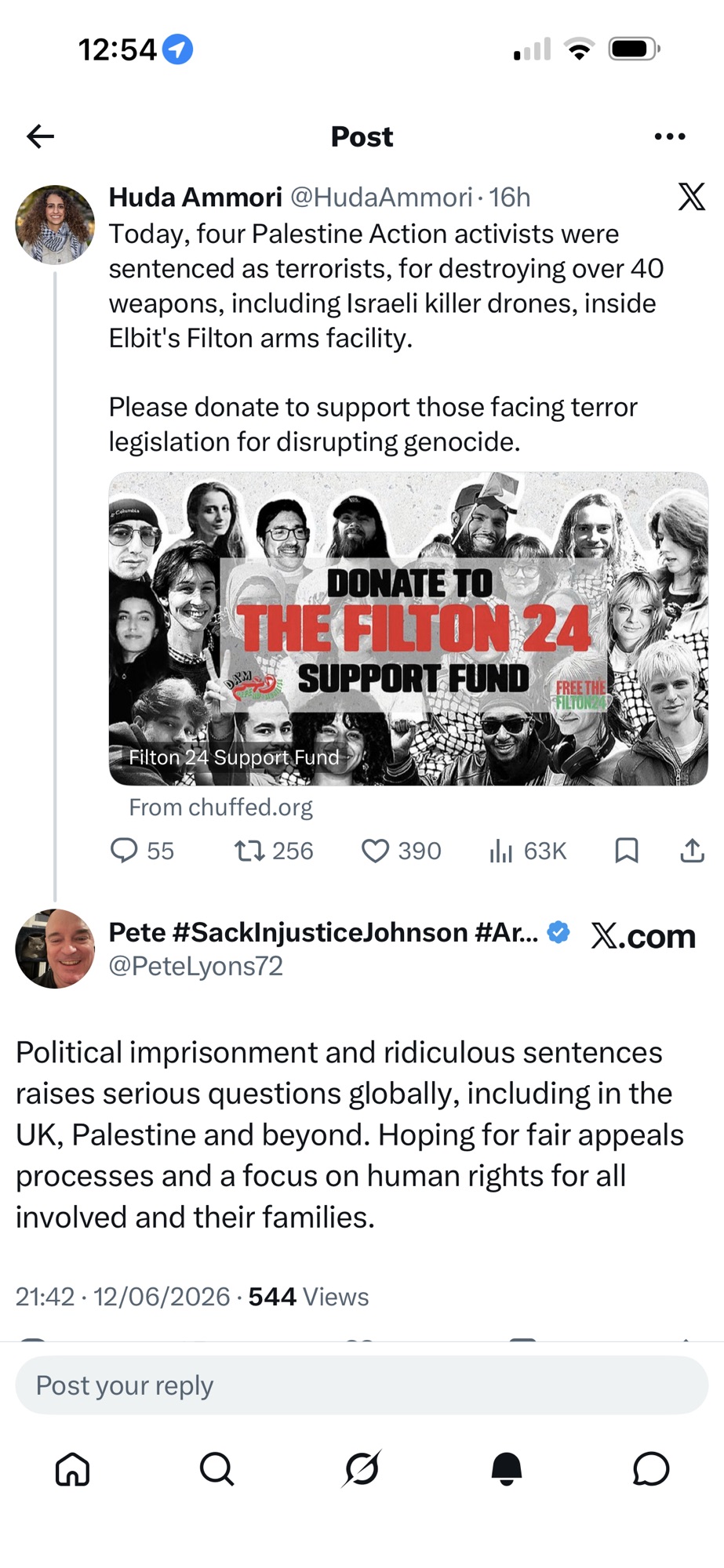
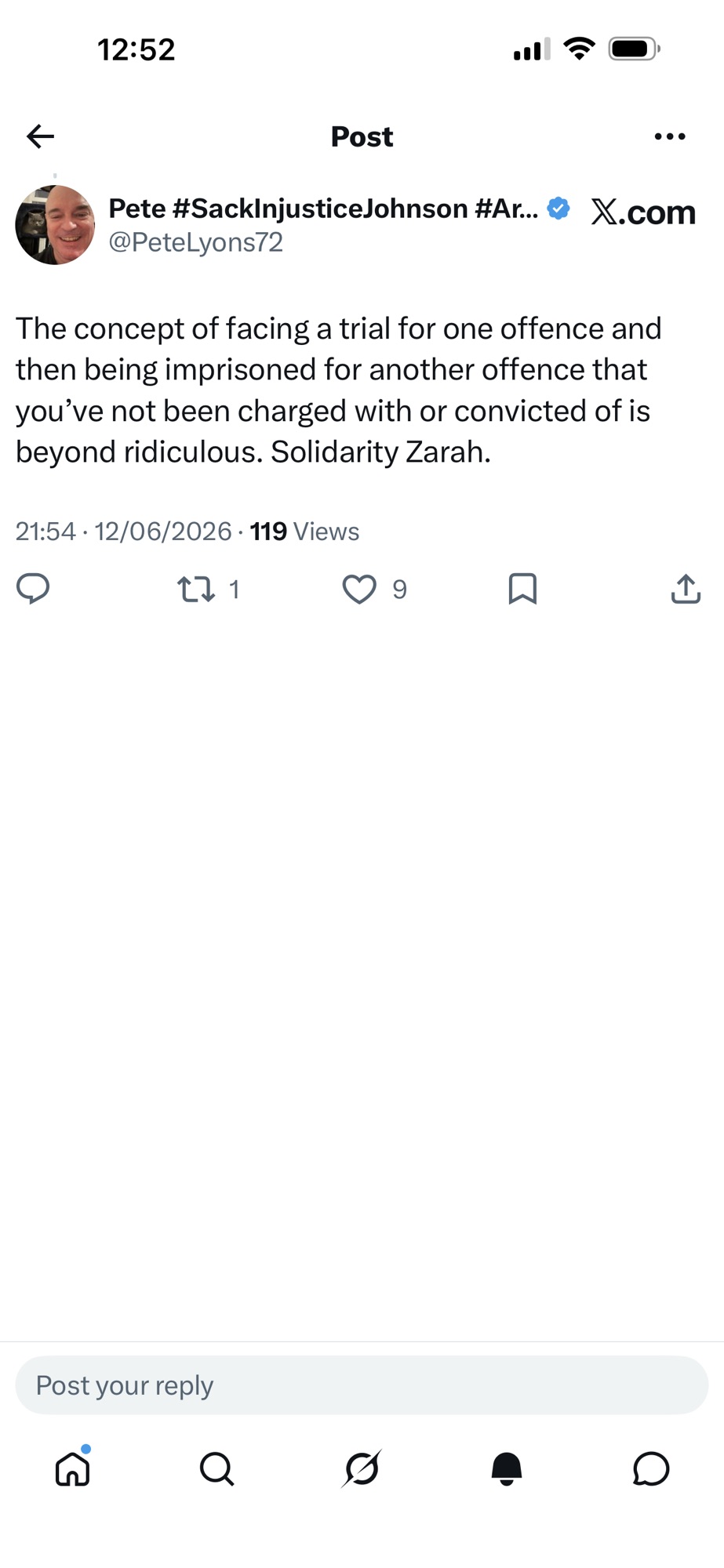
Amnesty – terrorism in the UK
x.com/craigmurrayorg/status/2066470871431045185
https://x.com/saulstaniforth/status/2066753241409319335?s=46&t=XgBsxv5LyxWhmBuQ2wK5bA
https://x.com/shockatadam/status/2066578958121095305?s=46&t=XgBsxv5LyxWhmBuQ2wK5bA
https://x.com/redrosa91940184/status/2066513676635382012?s=46&t=XgBsxv5LyxWhmBuQ2wK5bA
https://x.com/derbychrisw/status/2066517118397419863?s=46&t=XgBsxv5LyxWhmBuQ2wK5bA
https://x.com/furkangozukara/status/2066498640969863578?s=46&t=XgBsxv5LyxWhmBuQ2wK5bA
https://x.com/novaramedia/status/2066474623584088149?s=46&t=XgBsxv5LyxWhmBuQ2wK5bA
https://x.com/adamndsmith/status/2066518630813102409?s=46&t=XgBsxv5LyxWhmBuQ2wK5bA
https://x.com/thecanaryuk/status/2066489445793055075?s=46&t=XgBsxv5LyxWhmBuQ2wK5bA
https://x.com/starmerthefraud/status/2066753456904294796?s=46&t=XgBsxv5LyxWhmBuQ2wK5bA
https://x.com/defendourjuries/status/2066499555491795253?s=46&t=XgBsxv5LyxWhmBuQ2wK5bA
https://x.com/amnestyuk/status/2066492297076789587?s=46&t=XgBsxv5LyxWhmBuQ2wK5bA
https://x.com/jerseypsc/status/2066420528299049366?s=46&t=XgBsxv5LyxWhmBuQ2wK5bA
https://x.com/sov_media/status/2066543615363391563?s=46&t=XgBsxv5LyxWhmBuQ2wK5bA
https://x.com/trtworld/status/2066506038124110018?s=46&t=XgBsxv5LyxWhmBuQ2wK5bA
https://x.com/channel4news/status/2066608492178190402?s=46&t=XgBsxv5LyxWhmBuQ2wK5bA
https://x.com/swilkinsonbc/status/2066518947348803859?s=46&t=XgBsxv5LyxWhmBuQ2wK5bA
https://x.com/cageintl/status/2066532804691689505?s=46&t=XgBsxv5LyxWhmBuQ2wK5bA
https://x.com/thecradlemedia/status/2066535332598657071?s=46&t=XgBsxv5LyxWhmBuQ2wK5bA
https://x.com/petertatchell/status/2066478174750331055?s=46&t=XgBsxv5LyxWhmBuQ2wK5bA
https://x.com/scotnational/status/2066581691708195200?s=46&t=XgBsxv5LyxWhmBuQ2wK5bA
https://x.com/ajenglish/status/2066472765390033217?s=46&t=XgBsxv5LyxWhmBuQ2wK5bA
https://x.com/ajenglish/status/2066472765390033217?s=46&t=XgBsxv5LyxWhmBuQ2wK5bA
https://x.com/rehiana1980/status/2066594591990575322?s=46&t=XgBsxv5LyxWhmBuQ2wK5bA
https://x.com/ajenglish/status/2066618150465003698?s=46&t=XgBsxv5LyxWhmBuQ2wK5bA
https://x.com/middleeastmnt/status/2066550751049232699?s=46&t=XgBsxv5LyxWhmBuQ2wK5bA
https://x.com/thecanaryuk/status/2066530442866483274?s=46&t=XgBsxv5LyxWhmBuQ2wK5bA
x.com/jmcevoy_2/status/2065742834750153092
https://x.com/crispinshow/status/2065547747726397499?s=46&t=XgBsxv5LyxWhmBuQ2wK5bA
https://x.com/zackpolanski/status/2065708249517617453?s=46&t=XgBsxv5LyxWhmBuQ2wK5bA
https://x.com/doctor_rahmeh/status/2065572537568751757?s=46&t=XgBsxv5LyxWhmBuQ2wK5bA
https://x.com/harleyshah/status/2065531470366511428?s=46&t=XgBsxv5LyxWhmBuQ2wK5bA
https://x.com/tracking_power/status/2065563847336046902?s=46&t=XgBsxv5LyxWhmBuQ2wK5bA
https://x.com/hudaammori/status/2065548698482880558?s=46&t=XgBsxv5LyxWhmBuQ2wK5bA
https://x.com/goodlawproject/status/2065461954999632164?s=46&t=XgBsxv5LyxWhmBuQ2wK5bA
https://x.com/defendourjuries/status/2065346589133091091?s=46&t=XgBsxv5LyxWhmBuQ2wK5bA
https://x.com/richardburgon/status/2065540619460567334?s=46&t=XgBsxv5LyxWhmBuQ2wK5bA
https://x.com/swilkinsonbc/status/2065515661435056600?s=46&t=XgBsxv5LyxWhmBuQ2wK5bA
https://x.com/shafiur/status/2065417552587538495?s=46&t=XgBsxv5LyxWhmBuQ2wK5bA
https://x.com/shafiur/status/2065417552587538495?s=46&t=XgBsxv5LyxWhmBuQ2wK5bA
https://x.com/declassifieduk/status/2065492190734754140?s=46&t=XgBsxv5LyxWhmBuQ2wK5bA
https://x.com/pularjs/status/2065498003394248752?s=46&t=XgBsxv5LyxWhmBuQ2wK5bA
https://x.com/pularjs/status/2065504891594817663?s=46&t=XgBsxv5LyxWhmBuQ2wK5bA
https://x.com/pularjs/status/2065504891594817663?s=46&t=XgBsxv5LyxWhmBuQ2wK5bA
Federal Scientists Charged After Attempt to Secretly Bring 113 Virus Vials, Including Mpox Samples, to the US
— Read on www.ibtimes.co.uk/us-scientists-charged-smuggling-mpox-virus-samples-1800817
Ruling ‘devalues the rights and dignity of disabled people in this country’, say charity interveners who warn of ‘chaos’.
— Read on www.lawgazette.co.uk/news/charities-appalled-as-supreme-court-overturns-acid-test-on-deprivation-of-liberty/5126948.article
Managers and money-holders will no longer be allowed to fill compliance roles as well.
— Read on www.lawgazette.co.uk/news/sra-to-require-all-law-firms-to-submit-annual-accountants-reports/5126946.article
Categories
Police watch: Holland
Law Society Gazette
— Read on edition.pagesuite.com/html5/reader/production/default.aspx
Law Society Gazette
— Read on edition.pagesuite.com/html5/reader/production/default.aspx
Categories
Military deafness claims
Why a Council of Europe meeting this week matters.
— Read on www.lawgazette.co.uk/commentary-and-opinion/battle-over-echrs-case-law-on-migration/5126763.article
Categories
Medicine: using fish to treat burns
Grok says:
Brazilian researchers and doctors have indeed developed and are using sterilized tilapia (Nile tilapia) fish skin as a biological dressing/xenograft for treating second- and third-degree burns. It leverages the skin’s high collagen content (especially types I and III), natural moisture retention, and structural similarity to human skin to promote faster healing, reduce pain from frequent dressing changes, lower infection risk, and cut treatment costs dramatically—often by around 75% compared to traditional silver sulfadiazine cream and gauze.
The post (from @mog_russEN) includes a video clip from an Insider report that accurately depicts the process: lab preparation and sterilization of tilapia skin at the Federal University of Ceará (UFC), application to burn wounds (where the scale pattern is sometimes visible on the patient’s skin), tilapia farming/processing, and interviews highlighting the benefits. This matches documented medical practice.
Background and Development
This innovation originated in Brazil around 2015–2016 at the Federal University of Ceará’s Nucleus of Research and Development of Medicines, in collaboration with plastic surgeons and burn specialists at the Dr. José Frota Institute (IJF) in Fortaleza. Traditional skin banks in Brazil supply only about 1% of demand for burn victims, and standard treatments (daily cream applications and gauze changes) are painful, time-consuming, and expensive. Researchers turned to abundant, low-cost tilapia—a widely farmed fish in Brazil whose skin was previously often discarded—as a sustainable alternative.
Preclinical trials (on animals) began in 2015, followed by human clinical trials approved by Brazil’s health regulators (ANVISA) and ethics committees. By the early 2020s, over 300 patients had been treated in Ceará alone, with successful expansion to other Brazilian states (totaling 500+ patients across studies). The treatment has since been piloted or studied in additional countries.
How It Works: Scientific Basis
• Collagen and moisture: Tilapia skin is rich in collagen and retains high moisture levels, mimicking human dermis. It acts as a temporary biological bandage that adheres well to the wound bed, prevents fluid loss, and creates a moist environment ideal for re-epithelialization (skin regrowth).
• Application: The skin is thoroughly cleaned, sterilized (via chemicals and irradiation), and applied directly to cleaned burns. For superficial partial-thickness burns, it often stays in place until natural healing/scarring occurs underneath (no daily changes needed). Deeper burns may require 1–2 replacements over weeks. It eventually peels off or is removed once the underlying tissue regenerates.
• Advantages over standard care:
• Healing speed: Clinical trials (including randomized Phase III) show faster re-epithelialization—e.g., ~1.4 days quicker on average vs. silver sulfadiazine.
• Pain reduction: Far fewer dressing changes (e.g., 1–2 vs. 5+), leading to lower pain scores, less anxiety, and reduced need for analgesics. Patients report significant comfort improvements.
• Scarring and cosmetics: Promotes better tissue regeneration with potentially reduced scarring compared to traditional methods (though individual outcomes vary by burn severity, patient factors, and follow-up care).
• Cost and accessibility: Dramatically cheaper; also lowers hospital stays and overall treatment expenses—critical in resource-limited settings.
• Safety: No reported rejections or infections in major trials; the cold-water processing and sterilization minimize risks.
Peer-reviewed studies (e.g., in PMC and journals like Journal of Burn Care & Research) back these results, with consistent positive outcomes for partial-thickness burns.
Nuances and Limitations (Not “Miracle Cure” but Highly Effective)
• “Without pain or scars” phrasing: This is directionally accurate but slightly overstated for dramatic effect. Pain is significantly reduced (not eliminated), and scarring is often minimized/improved cosmetically compared to gauze/cream regimens—but complete scar-free healing depends on burn depth, patient age, genetics, and care quality. It’s not zero-risk or universally scarless.
• Best suited for: Primarily second-degree (partial-thickness) burns; third-degree (full-thickness) cases may still need grafts or additional interventions. Not a permanent skin replacement—it’s a temporary dressing while the body heals underneath.
• Not brand-new in 2026: Pioneered in the mid-2010s, it’s now established in Brazilian public health settings, with ongoing research, publications into 2024–2025, and efforts toward full regulatory standardization. It’s not experimental anymore in its core use case but continues to evolve.
• Comparison to similar tech: Distinct from Iceland’s Kerecis (commercial fish-skin grafts from Atlantic cod, FDA-approved since ~2013–2016 for burns/wounds, with strong military/clinical data). Brazil’s approach uses locally abundant tilapia and focuses on ultra-low-cost, scalable public-health applications.
Broader Context, Examples, and Implications
• Real-world examples: News reports (PBS, Reuters, NBC from 2017 onward) feature patients with severe burns from explosions or accidents who experienced rapid pain relief and healing. One early case: a woman with second-degree burns from a gas explosion treated successfully with tilapia skin.
• Edge cases/considerations: Requires proper sterilization to avoid contamination. Works best in controlled clinical settings initially. Long-term data is strong but still growing for very extensive burns. Ethical/sustainability angle: Repurposes fish farming byproduct (win-win for food security and medicine).
• Global relevance: Offers a low-cost, accessible option for developing countries where burns are common and skin grafts scarce. Could reduce healthcare burdens, antibiotic overuse, and patient suffering. Similar fish-skin research exists elsewhere (e.g., animal trials in China predating Brazil’s human use), but Brazil led human application.
In short, this is a genuine, evidence-based medical advance rooted in Brazilian innovation—practical, effective, and aligned with the post’s description. The video and text are factually sound. If you’re interested in the full studies or visuals from clinical reports, sources like PubMed/PMC have open-access papers detailing the trials.
x.com/irishpatriot91/status/2052522318715404556
Grok says:
Yes, the X post you linked is genuine. It is a real, publicly visible post from the account @irishpatriot91 (display name: IRISH PATRIOT), posted on May 7, 2026. The post has accumulated significant engagement (over 10k likes, thousands of reposts and replies as of the latest data), and it includes two images that form the core of its claim.
What the Post Actually Says and Shows
The full text of the main post is:
“Here is a Hantavirus Fact sheet from the early 90’s from a Government Health Department. It CLEARLY states Hantavirus is NOT contagious! Everyone learn this and pass it on.”
The two attached images are clear, high-resolution scans of a HANTAVIRUS FACT SHEET issued by the San Juan Basin Health Department (part of the Colorado Department of Public Health and Environment, with website sjbhd.org referenced at the bottom).
• The first image (page 403) explicitly states: “The virus is not contagious (passed from person to person) and is not transmitted by dogs or cats that catch and eat rodents.” It describes Hantavirus pulmonary syndrome (HPS), first recognized in the Southwest U.S. in 1993, transmitted via aerosolized dust from deer mouse urine, feces, or saliva.
• The second image covers rodent control, clean-up precautions, and safe handling of contaminated areas (e.g., bleach solutions, avoiding dry vacuuming, etc.).
These are not fabricated or AI-generated—they are scans of an official public health document. The content, layout, deer mouse illustration, hotline numbers, and branding match the style of early/mid-1990s U.S. state health department materials produced in response to the 1993 Four Corners outbreak.
Is the Document Itself Authentic and Accurate?
Yes, with minor caveats on timing and scope:
• Authenticity: The wording, design, and references align with verified historical public health materials from Colorado/New Mexico-area departments issued after the 1993 Sin Nombre virus (SNV) outbreak. Similar fact sheets from the era (and even later reprints) consistently emphasize rodent-to-human transmission only. The San Juan Basin Health Department has issued hantavirus guidance for decades, and the exact phrasing about non-contagiousness appears in multiple archived or republished versions circulating online.
• “Early 90’s” label: Technically a slight approximation—the 1993 outbreak prompted these sheets, so they are from the mid-1990s onward. But the document references the 1993 recognition and uses period-appropriate language, so the post’s description is reasonable for social-media shorthand.
• Scientific accuracy (for U.S. strains): The core claim is correct. Standard North American hantaviruses (e.g., Sin Nombre virus carried by deer mice) are not transmitted person-to-person. CDC and WHO guidance confirms this: transmission occurs almost exclusively through inhalation of aerosolized rodent excreta. Pets are not vectors.
Important nuance and exception (this is where context matters):
One specific strain—the Andes virus (endemic to parts of South America, especially Argentina and Chile)—is the only known hantavirus with documented (though limited) person-to-person transmission. It spreads via close contact (e.g., household, sexual, or caregiving), not casual airborne exposure like COVID. This is rare and inefficient compared to respiratory viruses.
Recent events (as of May 2026) appear to involve a hantavirus incident on a cruise ship originating from Argentina, which has fueled online discussion and explains why this old fact sheet is being recirculated. Replies to the post reference “gain-of-function,” bioweapons, cruise-ship “psy-op,” and comparisons to COVID—common in these circles. The fact sheet itself remains a valid historical reference for typical U.S./North American strains.
Broader Context and Implications
• Why this post resonates now: It pushes back against panic by showing official pre-2020s guidance. Similar fact sheets have been shared in past outbreaks to reassure the public that hantavirus doesn’t behave like a contagious respiratory illness.
• Edge cases and related considerations:
• If a strain suddenly shows efficient human-to-human spread outside South America, experts would investigate lab manipulation, mutation, or misidentification—exactly what some replies speculate.
• Hantavirus pulmonary syndrome has a high fatality rate (30–50% even with care), but it’s rare and preventable by avoiding rodent habitats.
• No vaccine or specific antiviral exists; treatment is supportive.
• Account perspective: @irishpatriot91 describes themselves as a “Digital Warrior” focused on information warfare, faith, and #SaveTheChildren. Their content often highlights government/health inconsistencies—consistent with the post’s framing.
Bottom line: The post is real, the images are unaltered scans of a legitimate government fact sheet, and the central claim (U.S. hantavirus is not person-to-person contagious) is scientifically sound for the strains the sheet addresses. It’s being shared in the context of current news, where the Andes virus exception adds a layer of complexity. If you’re seeing claims of widespread contagion or pandemic potential, treat them with skepticism unless tied to verified lab or sequencing data on a specific strain. Always cross-check with primary sources like the CDC for the latest. Let me know if you want deeper dives into the current outbreak, transmission science, or anything else!
Categories
Hantavirus
Categories
Johnson & Johnson talc
Categories
“Goyim”
x.com/henri_fjord/status/2050005831668875451
Grok says:
Yes, the post is true in what it presents: it accurately reproduces a real 2015 news article from The Times of Israel about a documented incident at a Satmar Hasidic school in London. The sarcastic caption (“iT jUsT mEaNs NaTiOns 🤡”) is commentary on the common defense that “goyim” is a neutral Hebrew/Yiddish term simply meaning “nations” (or non-Jews/gentiles), implying the worksheet example shows it being used in a clearly derogatory or inflammatory way in practice.
What the post shows
The attached image is a direct screenshot of a Times of Israel article titled “London Hasidic school apologizes for using term ‘goyim’” (published 2 September 2015). It reports on worksheets used at the Beis Rochel D’Satmar Girls’ School (a Satmar Hasidic school in Hackney, northeast London) for preschoolers aged 3–4.
The underlying incident (verified across multiple sources)
• A whistleblower provided worksheets to The Independent (a major UK newspaper), which broke the story on 1–2 September 2015.
• The worksheets were in Yiddish and part of a Holocaust lesson tied to a Satmar commemorative day (21 Kislev, marking the rescue of the Satmar Rebbe from Bergen-Belsen during WWII).
• Key example from the worksheet (independently translated):
• Question: “What have the evil goyim (non-Jews) done with the synagogues and cheders [Jewish primary schools]?”
• Answer: “Burned them.”
• Another question: “What did the goyim want to do with all the Jews?” Answer: “Kill them.”
The reporting framed this as preschoolers being taught that non-Jews are evil.
The school’s response and defense
• The school issued a statement apologizing for any offense: “The language we used was not in any way intended to cause offense. Now that this has been brought to our attention, we will endeavor to use more precise language in the future.”
• A spokesman (Shimon Cohen) clarified to outlets like the Jewish Chronicle and Jewish News that:
• There is no direct Yiddish word for “Nazis.”
• “Goyim” in this specific context referred only to the Nazis/perpetrators of the Holocaust in that historical lesson, not non-Jews in general.
• Claims that the school teaches “non-Jews are evil” were called “nonsense and simply false” or “mischievous.”
• They pledged to modify future worksheets.
Some Jewish media (e.g., The Jerusalem Post, VIN News) covered it similarly, while a former teacher quoted in The Independent suggested such attitudes toward non-Jews were “not uncommon” in ultra-Orthodox settings.
Linguistic and contextual nuances
• Etymology: “Goy” (singular) / “goyim” (plural) is standard Biblical/Hebrew for “nation” or “people.” It’s used neutrally in the Torah (e.g., “goy kadosh” = holy nation for Israel; other nations as “goyim”). In Yiddish-speaking Orthodox/Haredi communities, it commonly just means “non-Jew” or gentile—parallel to how “gentile” functions in English. It is not inherently a slur like the N-word in all contexts.
• But usage varies: In insular Hasidic communities (Satmar is one of the most insular and anti-assimilationist), it can carry pejorative or dehumanizing connotations when paired with “evil,” “wicked,” etc., especially in educational materials for very young children. This isn’t unique to Judaism—many tight-knit religious groups use insider/outsider language—but it stands out here because of the age of the students and the Holocaust context.
• Not representative of all Jews: Satmar Hasidim are a specific ultra-Orthodox sect. Mainstream Jewish organizations, Reform/Conservative Judaism, and even many Orthodox groups reject blanket negativity toward non-Jews. Jewish law and ethics emphasize treating gentiles with justice and kindness (e.g., the Seven Noahide Laws apply universally).
Broader implications and related considerations
• Why it resurfaces: Posts like this often appear in debates about Jewish/non-Jewish relations, antisemitism accusations, or claims of “dual loyalty”/supremacism. The 2015 story gets shared to counter the “it just means nations, stop being antisemitic” talking point. Similar reports have surfaced occasionally about other Haredi schools (e.g., later UK investigations into Hasidic boys’ education).
• Edge cases:
• Defenders argue context is everything (specific historical evil, not blanket). Critics say referring to Nazis exclusively as “evil goyim/non-Jews” without distinction risks generalizing to all outsiders, especially to toddlers.
• Religious education in private faith schools (especially insular ones) often prioritizes internal cohesion over secular sensitivity—similar tensions exist in other minority religious schools worldwide.
• Free speech/regulation angle: UK Ofsted inspects faith schools; this incident led to no closure or major sanctions, just an apology.
• No fabrication: The story was reported contemporaneously by mainstream outlets (Independent, Times of Israel, JTA, Jerusalem Post, etc.) with no credible debunking. The worksheet photos existed; the apology was on record.
In short, the event happened exactly as the screenshot describes. The sarcasm in the post highlights real tension around the term’s loaded usage in certain contexts, even if the school maintained it was narrowly about Nazis. This doesn’t prove universal attitudes across Judaism but does illustrate how language in closed religious education can clash with broader societal norms. If you have more context or a specific angle (e.g., the full worksheet or recent related events), I can dig deeper.
Categories
Palestine Action; Court of Appeal
Categories
Non-doctors filling doctors rotas
Categories
Fire at RAF Fairford
Categories
Fuel fire; Malaysia
Categories
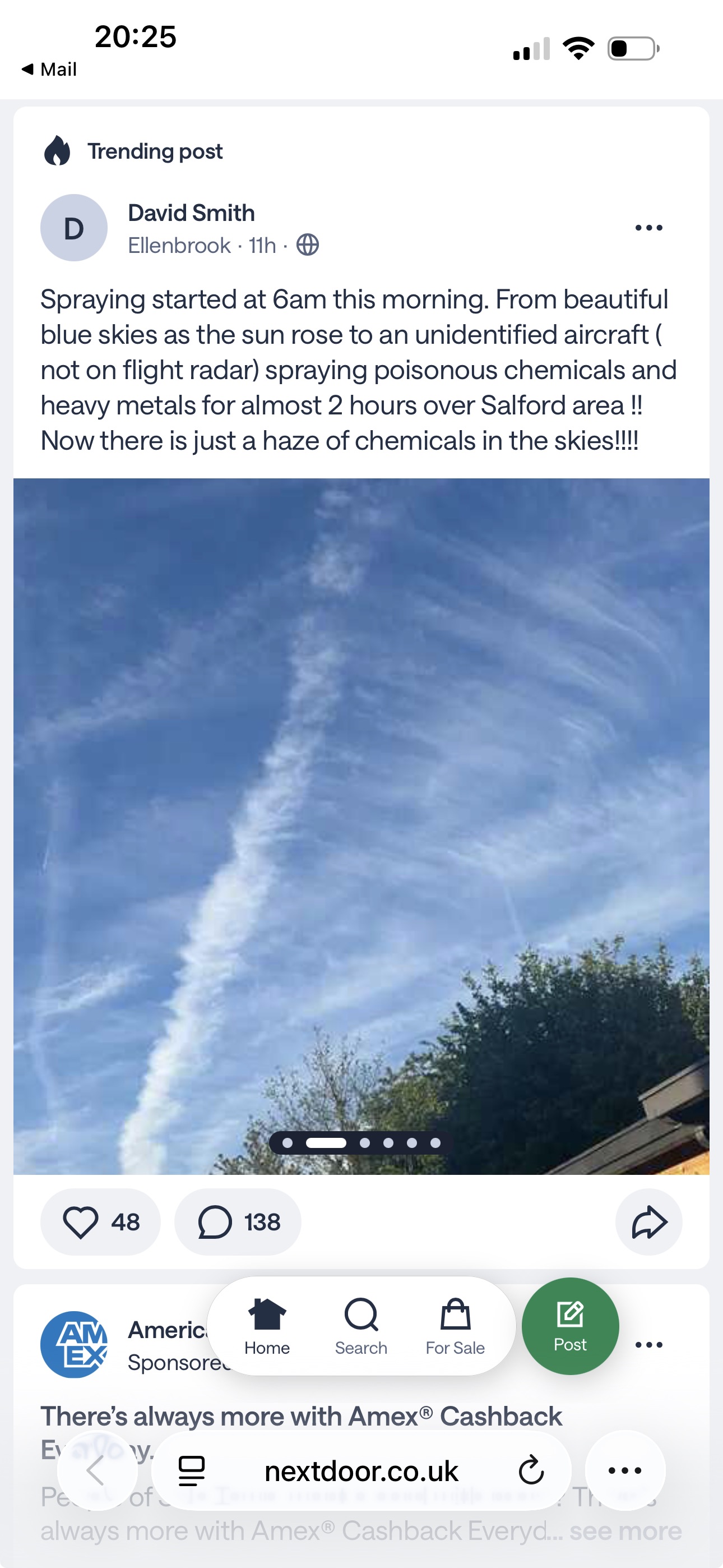
Chem trails – Salford
Categories
Fuel fire; Vietnam
Categories
Fuel fire; a map of the incidents
High Court upholds senior master’s decision that amended form had been validly served.
— Read on www.lawgazette.co.uk/news/judge-calls-for-rule-clarity-on-amending-of-claim-forms/5126558.article
No return to CPD hours – but regulator moves to more prescriptive regime for continuing competence.
— Read on www.lawgazette.co.uk/news/sra-proposes-mandatory-three-hour-ethics-discussions-for-solicitors/5126563.article
Categories
Weather controlled against Iran
Categories
Fuel fire; India
Categories

